Wire Harness Assembly Manufacturer for U.S. OEMs

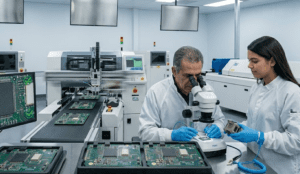
Fenix Manufacturing Solutions builds custom wire harnesses and cable assemblies for U.S. OEMs from a free trade zone in San Pedro de Macorís, Dominican Republic. Cutting, stripping, crimping, ultrasonic welding and electrical test run under an ISO 9001:2015 quality system, and finished assemblies ship duty-free to the United States under DR-CAFTA.

✓Crimp force monitoring on every press
✓Hi-pot and pull force testing in house
✓Duty-free to the U.S. under DR-CAFTA

Wire Harness and Cable Assembly

You send the drawing, the wire list and the connector part numbers. We build the harness, test it and ship it. Fenix has assembled harnesses in the Dominican Republic since 1987, for customers that include ABB, Cummins, Kawasaki and Honda.

Harnesses leave our floor already integrated into the unit when the program calls for it, because electromechanical and box build assembly runs in the same plant.

Custom wire harnesses

Bundled wires, cables, connectors and terminals built to your drawing, with sleeving, grommets and strain relief where the application needs them.

Cable assemblies

Multi-conductor cables, shielded or insulated, for power delivery and data transmission.

Marking and labeling

Wire marking by number, letter or color code, plus printed tags, heat-shrink tubing and wrap-around labels for traceability and part identification.

Harness integration

Installation of the finished harness into the enclosure or subassembly, on the same floor, so the unit ships complete.

How We Build and Verify a Harness

Every step is documented and repeatable. The verification column is what you ask any harness supplier for before you place an order.

StepWhat happensHow it is verified
CuttingWires and cables trimmed to the lengths on your drawing.Length check against the wire list
StrippingInsulation removed to expose the conductor for crimping or soldering.Visual inspection for nicked strands
CrimpingTerminals and connectors attached by press to the stripped ends.Crimp force monitoring on every cycle
TinningSolder applied to stripped ends to prevent oxidation before terminal application.Visual inspection
Ultrasonic weldingWire ends bonded without solder using high-frequency vibration.Pull force testing
Final electrical testContinuity and insulation checked on the finished assembly.Hi-pot testing; TDR where signal integrity matters


Why Build Harnesses Nearshore

Changes land the same day

A harness revision is a drawing change, a new connector and a new crimp setup. In your time zone that is a morning. Eleven hours away it is a week.

Duty-free entry

Harnesses that meet the rules of origin enter the United States without tariffs under DR-CAFTA. We check the bill of materials against those rules while quoting.

Freight you can absorb

Harnesses are bulky and light. Air freight from the Caribbean is a cost you can plan for; air freight from Asia is the cost that eats the saving.

Frequently Asked Questions

What is a wire harness?

A wire harness is a bundled arrangement of electrical wires, cables, connectors and protective components that transmits power and signals within a system. Bundling the conductors into one assembly improves organization and durability, and it turns a long wiring job on the production line into a single part that drops into place.

What do you need to quote a wire harness?

The harness drawing, the wire list with gauges and lengths, the connector and terminal part numbers, any test requirements, and your expected annual volume. If the design is still moving, send what you have. We come back with either a quote or the specific questions that are blocking one.

How do you know a crimp is good?

Crimp force monitoring measures the force applied on every press cycle and flags any crimp outside the window, so a bad connection is caught at the station rather than at final test. Pull force testing then verifies the mechanical strength of the completed termination against its tensile requirement.

Do you test the finished harness electrically?

Yes. Hi-pot testing applies high voltage to confirm insulation integrity and detect breakdowns across the assembly. Where signal integrity matters, time domain reflectometry locates breaks, shorts and impedance mismatches along the cable rather than just reporting a pass or fail.

Are harnesses built in the Dominican Republic duty-free in the United States?

They enter duty-free under DR-CAFTA when the finished assembly meets the agreement’s rules of origin. Manufacturing location alone does not qualify a product: it has to meet a tariff shift or regional value content rule, and the importer has to be able to document it. We review the bill of materials against those rules while quoting.

Which industries do you build harnesses for?

Automotive, power management, lighting, consumer devices, communications and industrial equipment. Fenix manufactures for customers including ABB, Cummins, Kawasaki and Honda under an ISO 9001:2015 quality system.

en_USEN