Fenix – USA
389 Palm Coast Parkway SW
Palm Coast, FL 32137
(803) 649-1381
info@fenix-mfg.com
Fenix – DR
San Pedro Industrial Free Zone
San Pedro De Macorís, República Dominicana
(809) 529-4421
info@fenix-mfg.com
Fenix – USA
389 Palm Coast Parkway SW
Palm Coast, FL 32137
(803) 649-1381
info@fenix-mfg.com
Fenix – DR
San Pedro Industrial Free Zone
San Pedro De Macorís, República Dominicana
(809) 529-4421
info@fenix-mfg.com
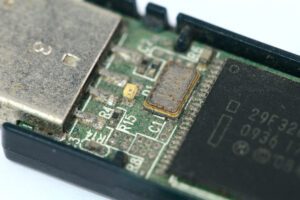
Fenix Manufacturing Solutions assembles printed circuit boards for U.S. OEMs from a free trade zone in San Pedro de Macorís, Dominican Republic. We build single-sided, double-sided and multi-layer boards using SMT and through-hole assembly, from prototype through production volume, under an ISO 9001:2015 quality system, and ship them duty-free to the United States under DR-CAFTA.
The board is the backbone of the product. Everything else depends on it being built right, which is why the work starts before the quote: you send the Gerber files and the bill of materials, we come back with what we would change.
Fenix assembles single-sided, double-sided and multi-layer boards, from a first prototype run through full production volume. Surface mount and through-hole run in the same plant, so a board that needs both does not move between suppliers.
Components on one face or both, for designs where density is not the constraint.
Stacked layers for higher density and controlled routing, assembled to your stackup.
Surface mount placement plus leaded components where the design calls for them, on the same line.
A first run on the process that will build production, so the results carry over when you scale.
Six stages, same sequence every time. The first one happens before you commit to anything.
| Stage | What happens |
|---|---|
| 1. DFM review | We go through the Gerber files, the bill of materials and the test requirements, and come back with the changes that affect yield, cost and testability. This happens before the quote, not after the first failed run. |
| 2. Solder paste printing | Paste is applied through a stencil onto the pads where components will sit. |
| 3. Component placement | SMT machines place components onto the printed paste. |
| 4. Reflow soldering | The board runs through a controlled heat profile that melts the paste and forms the joints. |
| 5. Through-hole assembly | Leaded components are inserted and soldered where the design requires them. |
| 6. Inspection and test | Boards are inspected and electrically tested before they leave the floor. From there they ship as bare PCBAs or go into box build assembly in the same plant. |
When a prototype comes back wrong, the fix is a conversation and a rebuild. In your time zone that happens this week. Across the Pacific it happens next month.
Boards that meet the rules of origin enter the United States without tariffs under DR-CAFTA. We check the bill of materials against those rules while quoting.
San Pedro de Macorís is a direct flight from several U.S. cities. An audit or a build review is a one or two day trip.
A wire harness is a bundled arrangement of electrical wires, cables, connectors and protective components that transmits power and signals within a system. Bundling the conductors into one assembly improves organization and durability, and it turns a long wiring job on the production line into a single part that drops into place.
The harness drawing, the wire list with gauges and lengths, the connector and terminal part numbers, any test requirements, and your expected annual volume. If the design is still moving, send what you have. We come back with either a quote or the specific questions that are blocking one.
Crimp force monitoring measures the force applied on every press cycle and flags any crimp outside the window, so a bad connection is caught at the station rather than at final test. Pull force testing then verifies the mechanical strength of the completed termination against its tensile requirement.
Yes. Hi-pot testing applies high voltage to confirm insulation integrity and detect breakdowns across the assembly. Where signal integrity matters, time domain reflectometry locates breaks, shorts and impedance mismatches along the cable rather than just reporting a pass or fail.
They enter duty-free under DR-CAFTA when the finished assembly meets the agreement’s rules of origin. Manufacturing location alone does not qualify a product: it has to meet a tariff shift or regional value content rule, and the importer has to be able to document it. We review the bill of materials against those rules while quoting.
Automotive, power management, lighting, consumer devices, communications and industrial equipment. Fenix manufactures for customers including ABB, Cummins, Kawasaki and Honda under an ISO 9001:2015 quality system.